

The Environment, Biodiversity and Climate Change Forum (EBCCF) has been implementing the project entitled “Degraded Land Restoration and Rehabilitation in Adami Tullu Jido Kombolcha Woreda,” with financial support from the United Nations Development Programme (UNDP) Global Environment Facility (GEF) Small Grants Programme (SGP). The project is designed to contribute to the restoration and rehabilitation of degraded landscapes, improve biodiversity, enhance ecosystem services, and strengthen the capacity of local communities to sustainably manage and protect their natural resources.
One of the key interventions planned under the project is the restoration of degraded and deforested land through plantation pit preparation, enrichment planting, and the establishment of indigenous tree species. These interventions are intended to improve vegetation cover, restore the ecological functions of degraded landscapes, enhance biodiversity, reduce land degradation, and contribute to local communities’ resilience to the adverse effects of climate change.
During the 2026 implementation period, EBCCF purchased and planted more than 12,000 indigenous tree seedlings in selected degraded and deforested areas. The species planted included Cordia africana, Olea africana, and Dodonaea angustifolia, which were selected because of their ecological importance, adaptability to the local environment, and contribution to biodiversity conservation and ecosystem restoration.
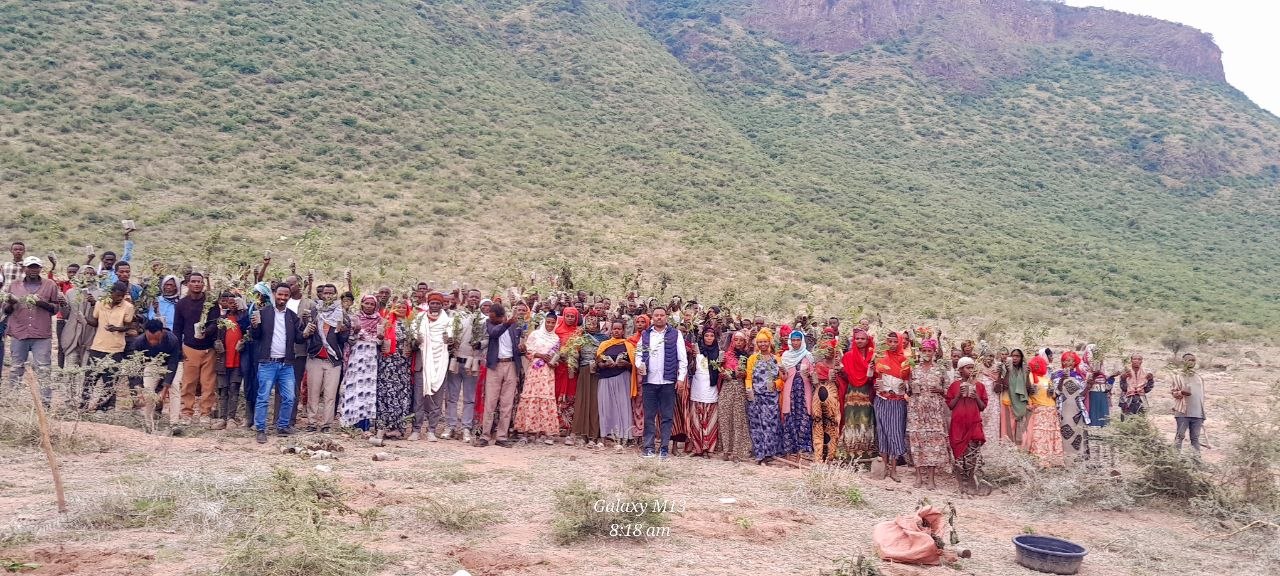
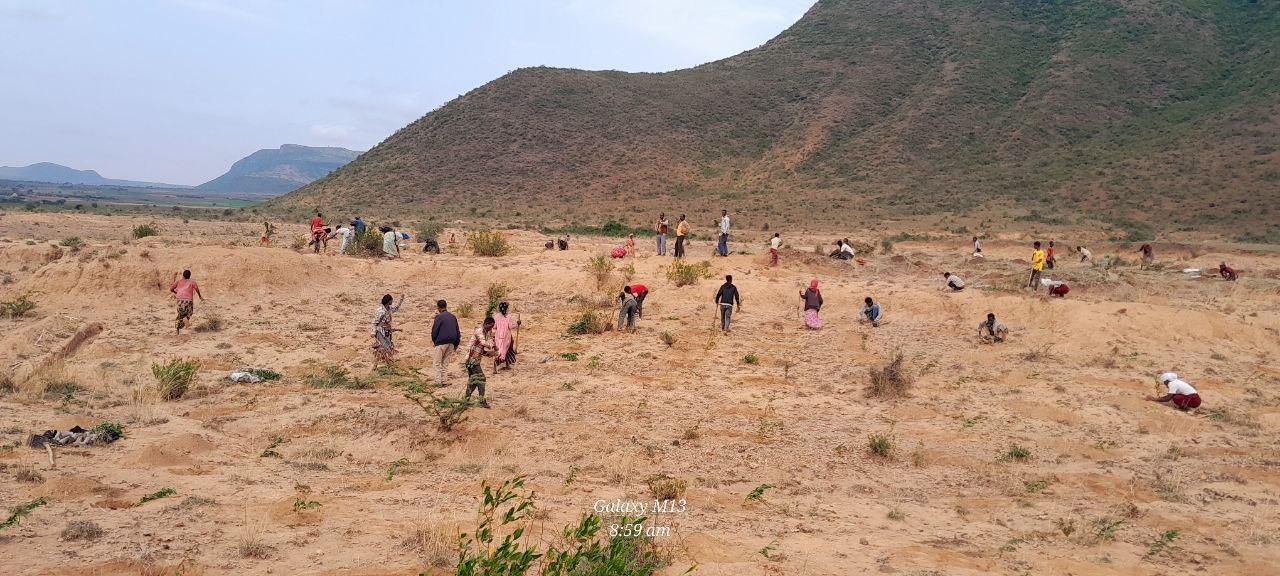
The plantation and enrichment planting activities were undertaken in three targeted kebeles: Shisho Gulanta, Qamo Walico, and Warja Washgulla. Before planting, appropriate plantation pits were prepared to provide favorable conditions for seedling establishment and growth. The enrichment planting approach was particularly important for restoring areas where natural vegetation had been significantly depleted and where natural regeneration alone was insufficient to ensure effective ecosystem recovery.
The plantation activity was implemented with strong participation from the local community. More than 450 direct beneficiaries, including community members from the three targeted kebeles, actively participated in activities such as site preparation, plantation pit digging, seedling transportation, planting, and the initial protection and management of the planted seedlings. The active involvement of local communities is expected to strengthen local ownership of the restoration interventions and promote the long-term protection and sustainability of the rehabilitated areas.
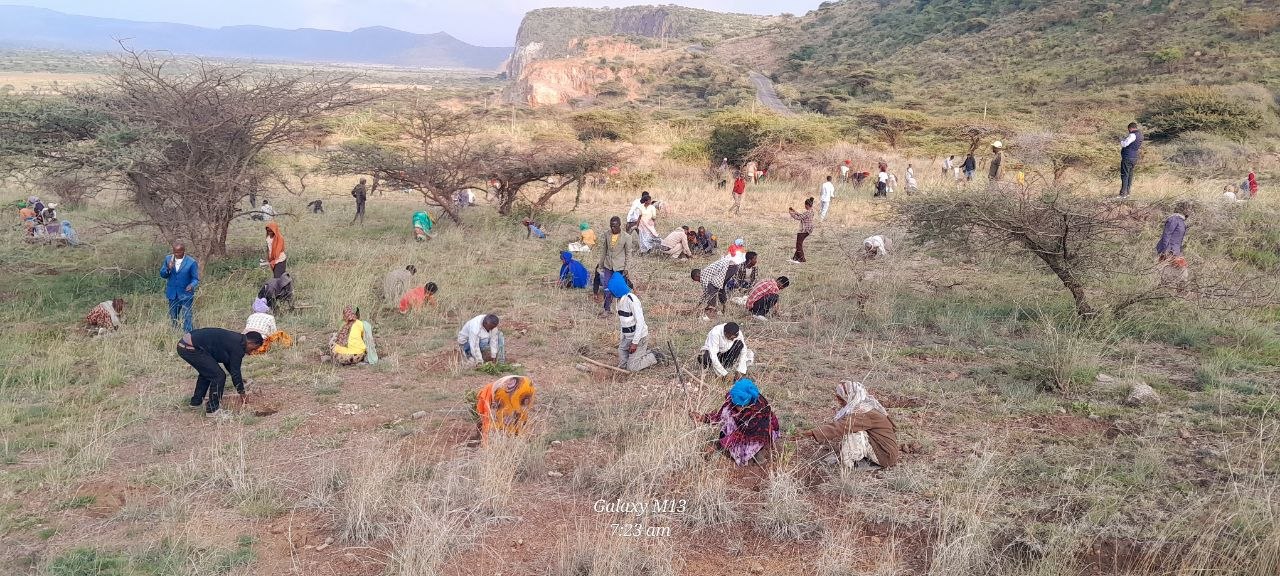
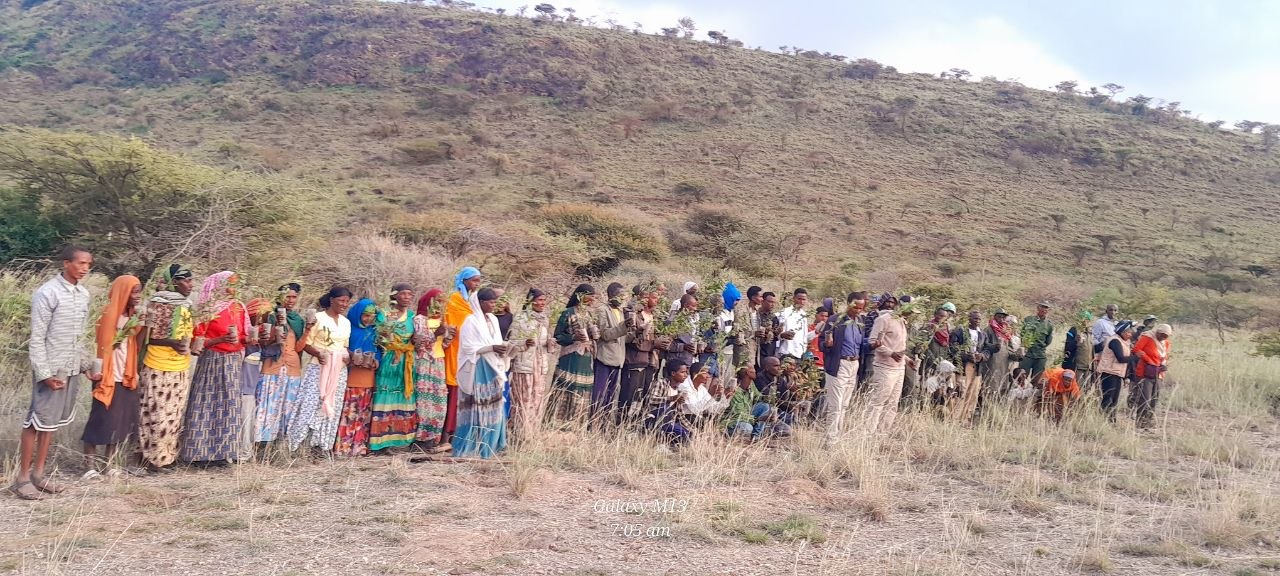
The planting of indigenous tree species is expected to generate multiple environmental and socio-economic benefits. In addition to improving vegetation cover and restoring degraded landscapes, the intervention will contribute to biodiversity conservation, soil and water conservation, improved ecosystem services, carbon sequestration, and climate change mitigation and adaptation. As the planted trees become established, they are also expected to support the recovery of local habitats and ecological processes while contributing to the long-term sustainability of natural resources in the project area.
Overall, the plantation and enrichment planting activities represent an important step toward achieving the project’s broader objective of restoring degraded land and strengthening community resilience through sustainable natural resource management. Continued follow-up, protection, maintenance, and monitoring of the planted seedlings will be essential to ensure their survival and successful establishment and to maximize the long-term environmental and livelihood benefits of the intervention.