

Farmers and Extension Workers Training Workshop on SLM, Small Ruminant Fattening, Poultry, and Beekeeping Best Practices.
TRAINING REPORT
- Introduction
Land degradation supported by climate change is one of the challenges facing residents of Adami Tullu Jido Kombolcha. As is known, the EBCCF has designed and awarded a project titled “Degraded Land Restoration and Rehabilitation being implemented in Adami Tullu Jido Kombolcha, funded by the UNDP Small Grants Programme (SGP).
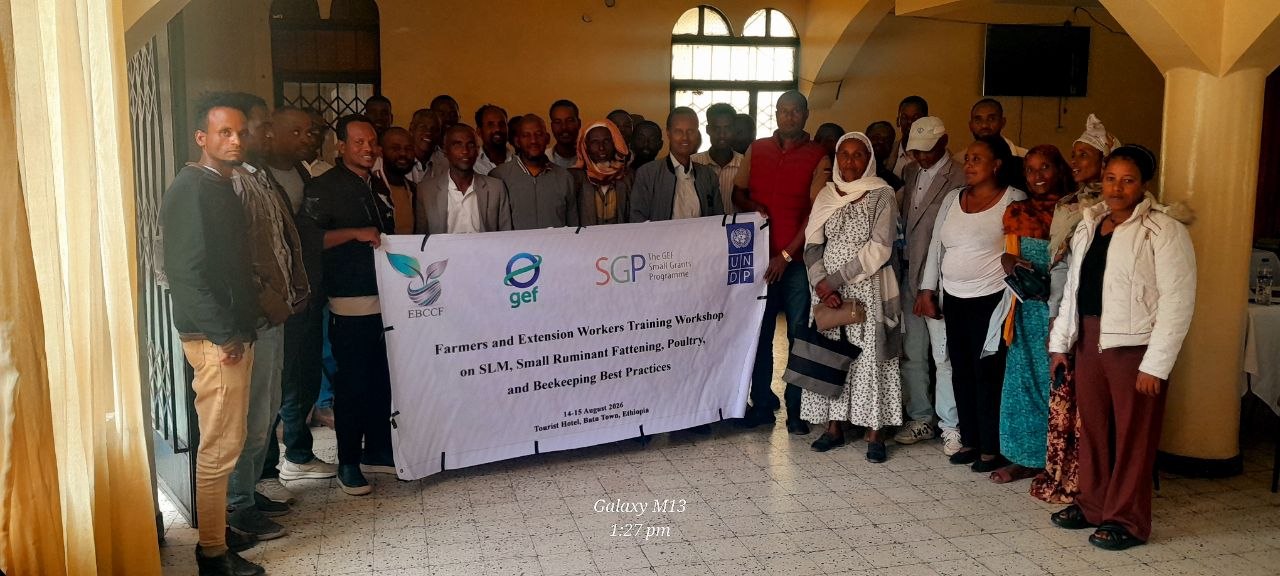
One of the planned activities is to train extension workers, community leaders, and youth groups on SLM, beekeeping, small ruminant fattening, poultry, agroforestry, and biodiversity best practices. In light of this, the EBCCF is organizing a training workshop from 14 to 15 August 2026 in Batu town, as outlined in the proposal. The workshop aims to strengthen the knowledge, skills, and practical capacity of farmers, extension workers, community representatives, and other relevant stakeholders in sustainable land management and climate-resilient livelihood practices. The training focuses on four major thematic areas: sustainable land management (SLM), poultry production and management, sheep and goat fattening and management, and beekeeping practices and management.
The training was designed to contribute to the broader objective of improving community capacity to restore degraded land, sustainably manage natural resources, diversify household livelihoods, improve agricultural productivity, and strengthen resilience to the impacts of climate change.
The training brought together farmers, technical experts, and other participants from the project intervention areas. Resource persons with expertise in the respective thematic areas delivered technical presentations, facilitated discussions, responded to participants’ questions, and provided practical recommendations for future implementation.
- Objectives of the Training
The overall objective of the training was to enhance the knowledge and practical skills of participants in sustainable natural resource management and diversified, climate-resilient livelihood activities.
The specific objectives were to:
- Improve participants’ understanding of sustainable land management principles and practices.
- Strengthen knowledge of soil and water conservation, land restoration, agroforestry, and natural resource management.
- Improve participants’ capacity to establish and manage productive poultry initiatives to diversify their income sources.
- Provide practical knowledge on sheep and goat selection, feeding, housing, health care, fattening, and marketing.
- Strengthen participants’ understanding of improved beekeeping practices, colony management, bee health, and honey production.
- Promote livelihood diversification as a strategy for improving household income and resilience.
- Participants
Participants were farmers, Kebele leaders, and extension workers (DA) from each kebele and woreda, as well as higher officials and experts. A total of 42 (34 male and 8 female) beneficiaries participated
- Opening Session
The training program began with an introductory session delivered by Dr. Dejene Teressa, project manager at EBCCF, who welcomed the participants and introduced the purpose and major components of the training. He explained the importance of integrating natural resource management with livelihood development and emphasized that sustainable land management and livelihood diversification should be implemented together to achieve lasting improvements in household welfare and environmental sustainability.
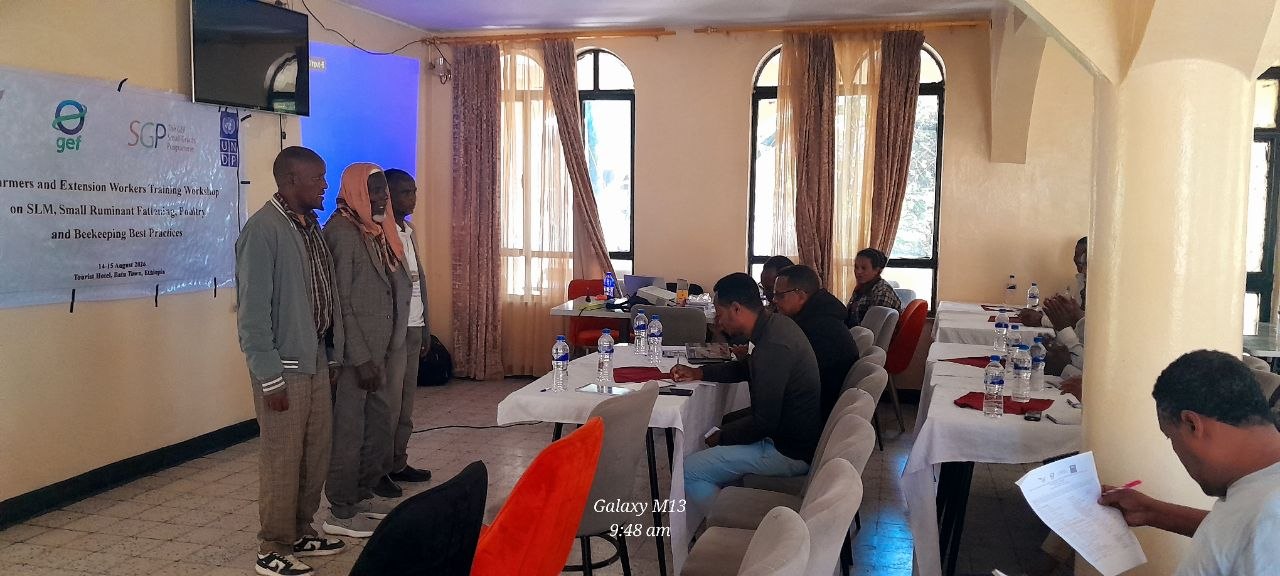
Following the introduction, a cultural blessing was delivered by Aba Gadas. The blessing emphasized the importance of cooperation, respect for natural resources, community solidarity, and collective responsibility in achieving sustainable development.
3.1 Welcome Remarks
The welcome remarks were delivered by Dr. Girma Balcha, Executive Director of the Environment, Biodiversity and Climate Change Forum (EBCCF). He warmly welcomed all participants, trainers, government representatives, community members, and other stakeholders to the training workshop. He expressed his appreciation to the donor for its financial support toward restoring degraded lands and improving the livelihoods and resilience of low-income farming communities.
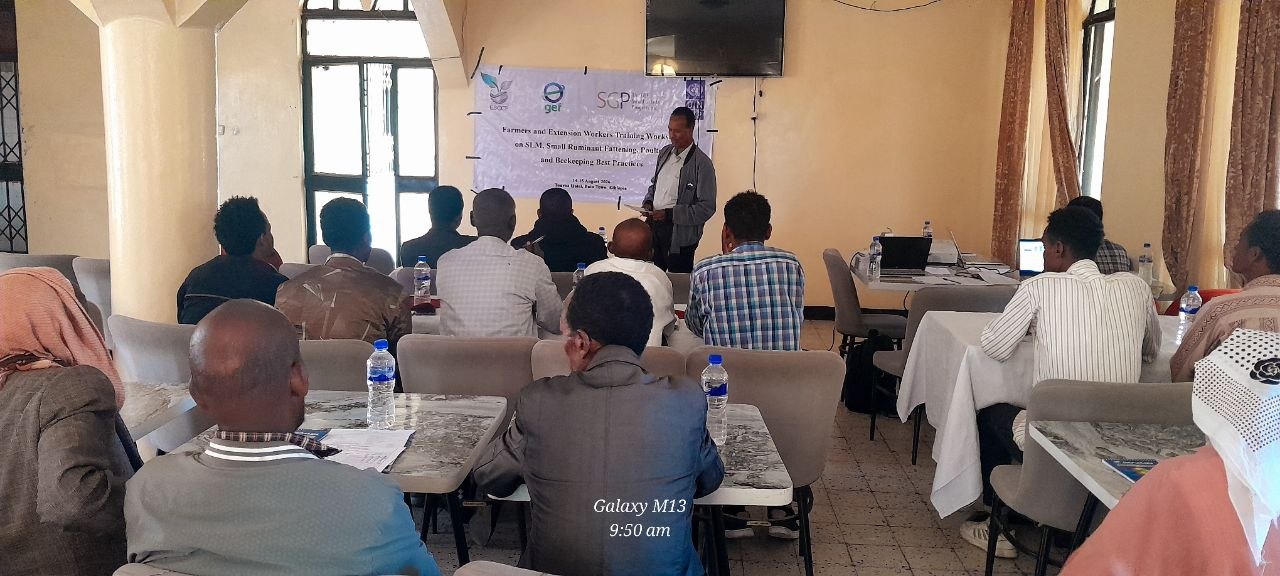
Dr. Girma emphasized that the continued expansion of land degradation in different parts of the country, including the project intervention areas, has increased the vulnerability of farming communities to the adverse and unpredictable impacts of climate change. He noted that land degradation, declining soil fertility, vegetation loss, and soil erosion are not only reducing agricultural productivity but also undermining food security, ecosystem services, and the overall resilience of rural communities. He stressed that unless current trends of land degradation are reversed through appropriate and sustainable land management practices, the impacts of climate change are likely to further exacerbate food insecurity and other environmental and socioeconomic challenges.
In this regard, he highlighted the importance of the training and capacity-building initiative in enhancing farmers’ awareness, knowledge, and practical skills in sustainable land management and climate-resilient livelihood practices. He emphasized that strengthening the capacity of farmers and other local stakeholders is essential for ensuring the effective implementation, community ownership, and long-term sustainability of development interventions.
Finally, Dr. Girma encouraged all participants to actively and effectively participate in the training sessions, share their experiences, and make practical use of the knowledge and skills gained. He further called upon the participants to cascade the knowledge, skills, and lessons learned from the workshop to other cooperative members and community members, thereby expanding the benefits of the training and contributing to the wider adoption of sustainable land management and livelihood practices.
3.2 Opening Remarks
The opening remarks were delivered by Mr. Kewetti Aabbe, Head of the Woreda Cooperative Development Office, who officially opened the training. In his opening speech, Mr. Kewetti began by acknowledging and appreciating the Environment, Biodiversity and Climate Change Forum (EBCCF) for its previous project interventions and achievements in ATJK Woreda. He noted that EBCCF had implemented a number of development projects in the woreda and had achieved impressive and tangible results, particularly in areas contributing to community development and improved livelihoods.
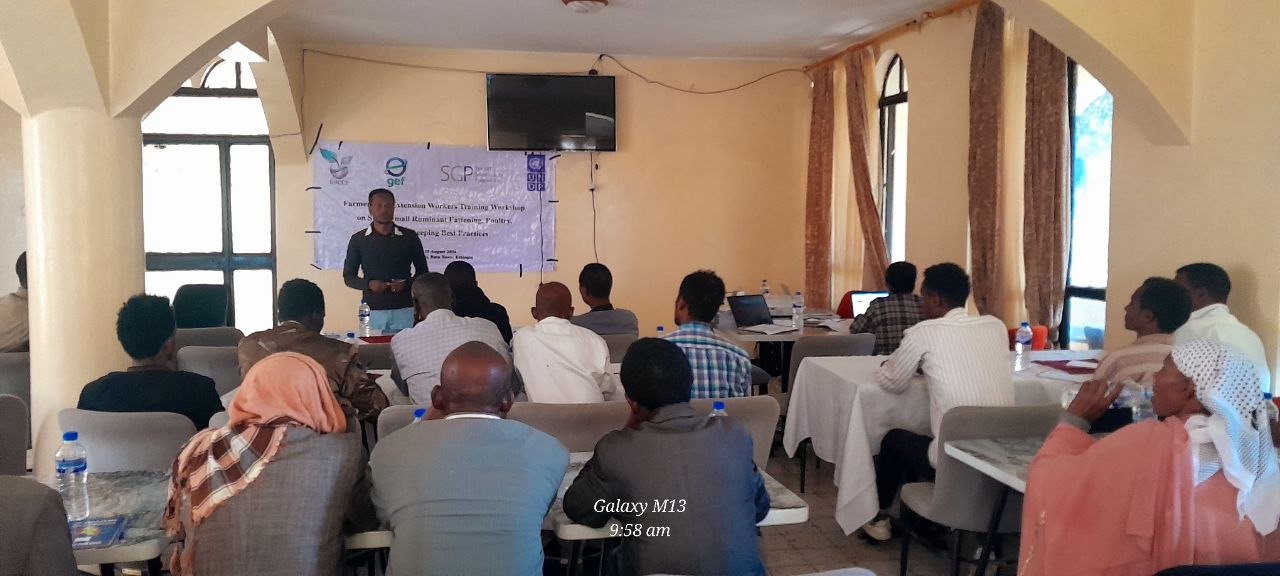
Mr. Kewetti also expressed his appreciation and gratitude to EBCCF for initiating and implementing the current project in ATJK Woreda. He emphasized that the project comes at an important time, particularly given the need to strengthen sustainable natural resource management, restore degraded land, improve community livelihoods, and enhance resilience to climate change. He further recognized the importance of collaboration between EBCCF, government institutions, communities, and other stakeholders to ensure the successful implementation and sustainability of project interventions.
In concluding his remarks, Mr. Kewetti highlighted the importance of the training in strengthening the technical knowledge and practical capacity of the participants. He encouraged all participants to actively engage throughout the training sessions, ask questions, share their own experiences, and learn from the expertise of the trainers. He particularly encouraged participants to carefully follow the presentations and discussions and to apply the knowledge and skills gained in their respective communities.
Finally, Mr. Kewetti officially declared the training open and wished all participants a successful and productive training. He urged them to make full use of the opportunity to gain practical knowledge and skills from the experienced trainers and to transfer the knowledge gained to other community members for wider impact
3.3 Keynote Remark
The keynote address was delivered by Mr. Dejene Birru, Coordinator of the UNDP-GEF Small Grants Programme (SGP). In his remarks, he emphasized the overall objectives and importance of the project. According to Mr. Dejene, the project is primarily designed to contribute to the restoration of degraded lands and the sustainable management of existing natural resources, while simultaneously strengthening the capacity of local communities to adapt to and mitigate the impacts of climate change.
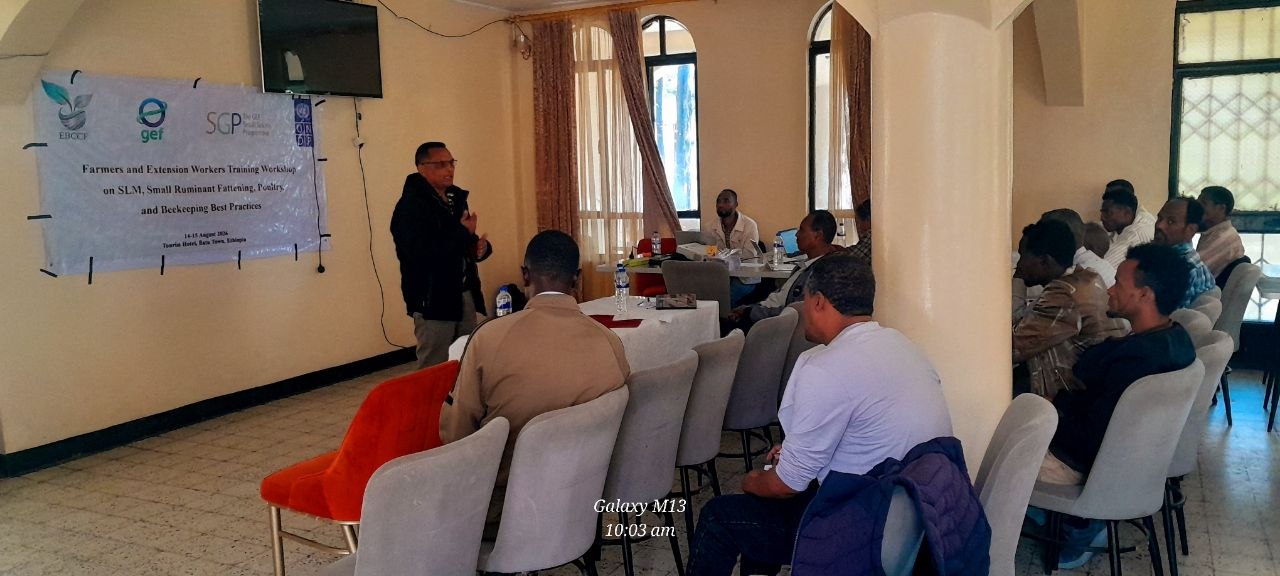
His keynote also emphasized that land degradation, soil erosion, vegetation loss, declining soil fertility, climate variability, and unsustainable natural resource utilization are closely interconnected challenges. Addressing these challenges requires integrated interventions that combine land restoration, sustainable agricultural practices, natural resource conservation, and livelihood diversification.
He noted that project implementation commenced in April 2026 and that the UNDP-GEF SGP office has since been closely monitoring the project’s progress and its contribution toward achieving the intended objectives. Based on the progress observed so far, he expressed his satisfaction and confirmed that the implementation of the project is progressing well.
Finally, Mr. Dejene called upon government stakeholders, project beneficiaries, and other relevant partners to continue working closely with the project implementing organization, EBCCF, to ensure the successful implementation of the remaining activities and the achievement of the expected project results. He further encouraged participants to take ownership of the interventions and ensure that project-supported practices continue beyond the project implementation period.
- Training Sessions
4.1 Sustainable Land Management Practices
Trainer: Dr. Dejene Teressa
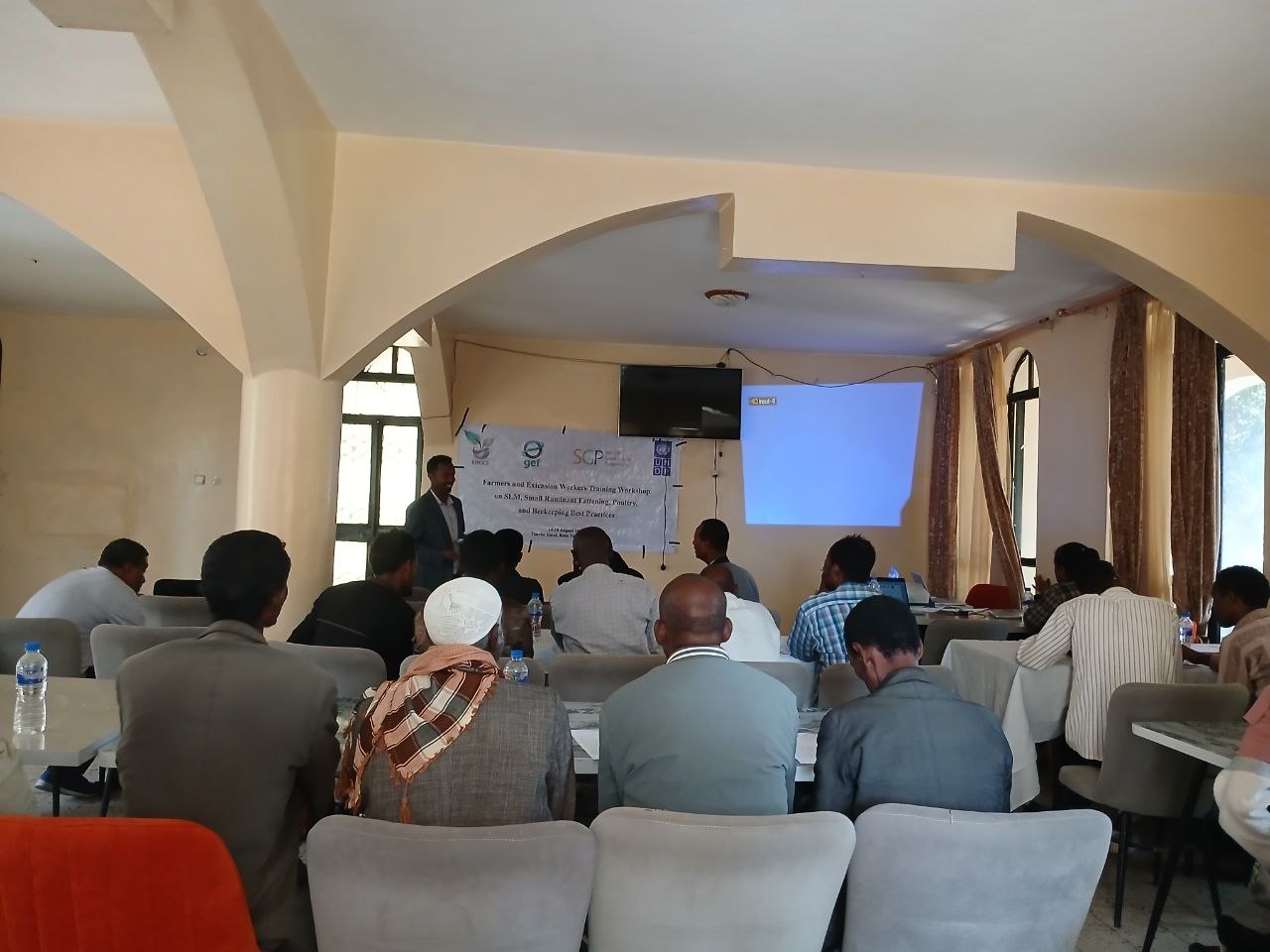
The first technical presentation focused on Sustainable Land Management (SLM). The session introduced participants to the concept of sustainable land management and its importance in maintaining soil productivity, conserving water, restoring degraded landscapes, and improving agricultural production.
The presentation explained that sustainable land management involves the appropriate management of land, soil, water, vegetation, and other natural resources to meet present needs without compromising the ability of future generations to meet their needs.
Major issues discussed included:
4.1.1 Land degradation
Participants were introduced to the major causes and consequences of land degradation. These include soil erosion, declining soil fertility, deforestation, overgrazing, inappropriate cultivation practices, loss of vegetation cover, and unsustainable use of natural resources.
The trainer emphasized that land degradation directly affects agricultural productivity, water availability, biodiversity, and household livelihoods.
- Soil and water conservation
The session highlighted the importance of reducing soil erosion and improving water infiltration and retention. Different soil and water conservation measures were discussed, including soil bunds, stone bunds, terraces, grass strips, contour farming, check dams, water harvesting structures, infiltration pits and trenches, gully rehabilitation, and vegetative conservation measures
Participants were encouraged to select conservation measures based on local topography, soil characteristics, rainfall patterns, land-use systems, and farmers’ needs.
4.1.3 Vegetation restoration and agroforestry
The importance of restoring vegetation cover was also discussed. Participants learned how trees, shrubs, grasses, and other vegetation contribute to reducing erosion, improving soil organic matter, enhancing biodiversity, regulating the local microclimate, and increasing carbon sequestration.
The trainer emphasized the role of agroforestry in combining trees with crops and/or livestock to generate environmental and economic benefits.
4.1.4 Integrated land restoration
The presentation emphasized that land restoration should not depend on a single intervention. Physical soil and water conservation measures should be integrated with biological measures such as tree planting, assisted natural regeneration, area closure, grass development, and improved land-use practices.
4.1.5 Climate change adaptation and mitigation
The relationship between sustainable land management and climate change was also discussed. Sustainable land management contributes to climate change adaptation by improving soil moisture, agricultural productivity, vegetation cover, and ecosystem resilience. It also contributes to mitigation through increased vegetation growth and soil carbon storage.
Participants were encouraged to integrate climate-smart practices into their farming and natural resource management activities.
4.2 Poultry Production and Management
Trainer: Mr. Chala Eda’a
The second training session focused on poultry production and management. The session emphasized the potential of poultry production as a relatively quick-return livelihood activity that can contribute to household income, food security, and women’s economic empowerment.
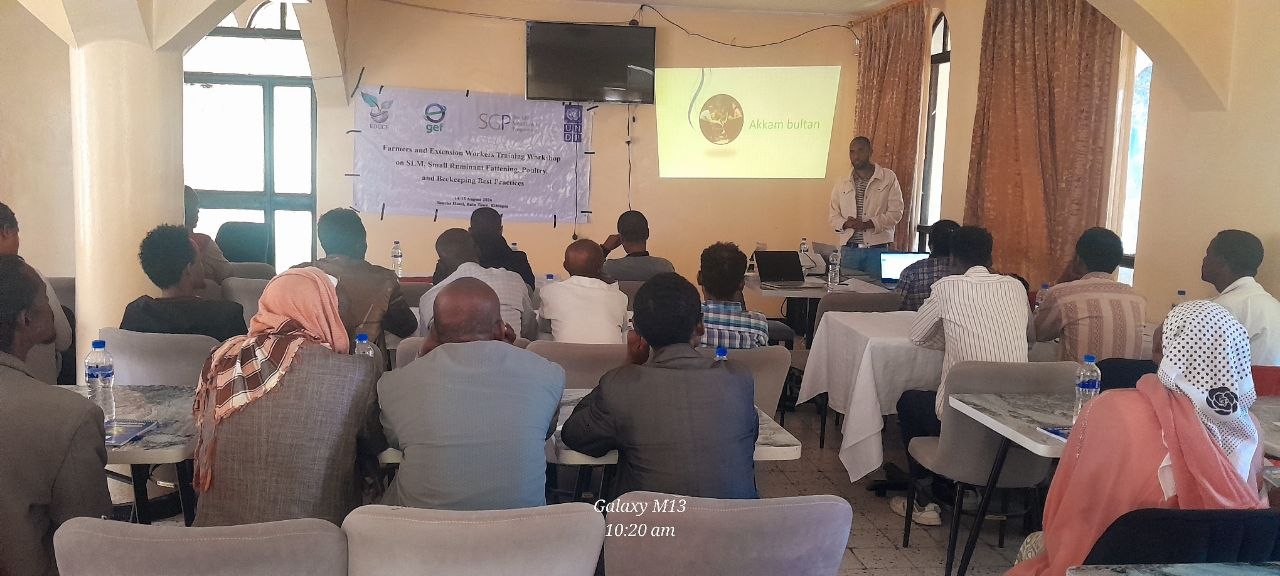
The trainer discussed the major components of successful poultry production, including breed selection, housing, feeding, watering, health management, biosecurity, recordkeeping, egg production, and marketing.
Major topics discussed included:
4.2.1 Selection of poultry breeds
Participants were introduced to the importance of selecting productive and locally adaptable poultry breeds. Breed selection should consider egg production, growth rate, disease resistance, feed requirements, management conditions, and market demand.
4.2.2 Poultry housing
The importance of constructing clean, well-ventilated, dry, secure, and appropriately sized poultry houses was emphasized. Proper housing protects birds from extreme weather conditions, predators, diseases, and unnecessary stress.
4.2.3 Feeding and nutrition
The trainer emphasized that balanced nutrition is essential for healthy growth, egg production, and good reproductive performance. Participants were advised to provide adequate feed and clean water and to ensure that birds receive appropriate quantities of energy, protein, minerals, vitamins, and other essential nutrients.
4.2.4 Poultry health and disease prevention
Disease prevention was identified as one of the most important components of poultry management. Participants were advised to maintain proper sanitation, quarantine newly introduced birds when appropriate, control visitors and movement, maintain clean equipment, and follow recommended vaccination programs.
The importance of early identification of sick birds and timely consultation with animal health professionals was also emphasized.
4.2.5 Egg production and handling
The session covered proper collection, handling, storage, and marketing of eggs. Participants were encouraged to maintain clean production environments and minimize egg breakage and contamination.
4.2.6 Record keeping and marketing
Participants were encouraged to maintain records of bird numbers, feed consumption, mortality, vaccination, egg production, sales, and expenditures. Such records can help farmers determine profitability and make informed management decisions.
The trainer also emphasized the importance of identifying reliable markets and developing poultry enterprises based on local demand.
4.3 Sheep and Goat Fattening and Management
Trainer: Mrs. Genet Dadi
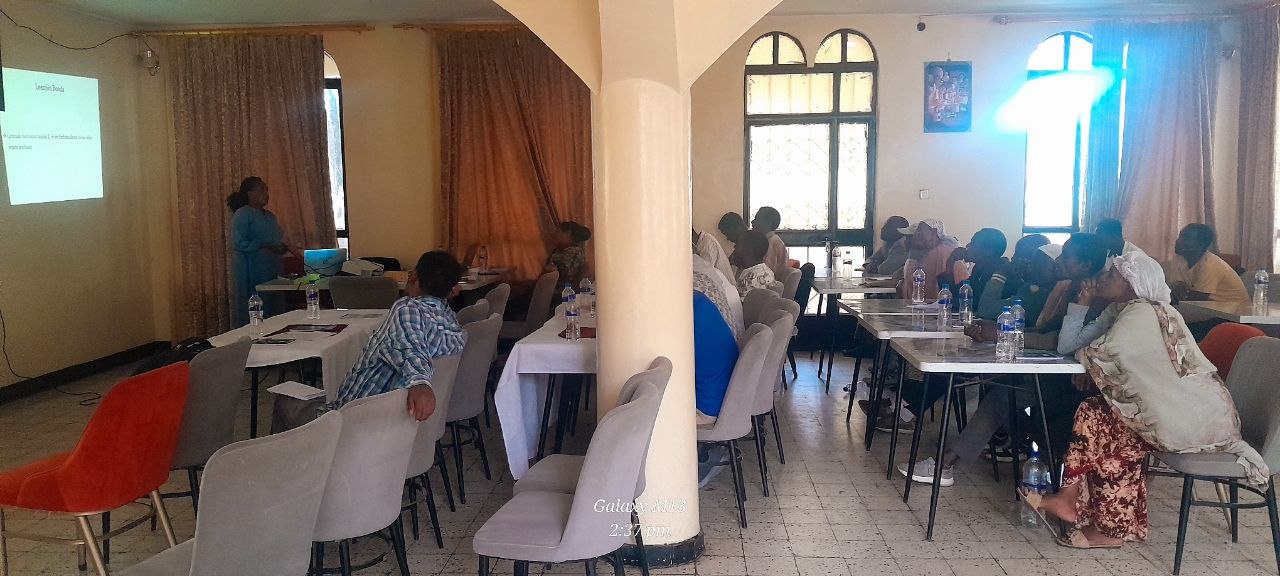
The third technical session focused on sheep and goat fattening and management. Small-ruminant production was presented as an important livelihood activity with significant potential for income generation, household food security, and asset accumulation.
The session covered the major stages of a successful fattening enterprise, from animal selection and housing to feeding, health management, monitoring, and marketing.
4.3.1. Selection of animals for fattening
Participants were trained on selecting healthy and suitable animals for fattening. Important selection criteria include healthy appearance, good body condition, appropriate age, good growth potential, sound legs and feet, absence of visible disease or injury, good appetite, suitable body conformation, market preference, etc.
The trainer emphasized that purchasing healthy animals at an appropriate price is essential for profitable fattening.
4.3.2 Housing management
The importance of clean, dry, well-ventilated, and secure housing was discussed. Proper housing reduces disease risks and protects animals from adverse weather conditions. Thus, participants were encouraged to provide adequate space, clean bedding where appropriate, proper drainage, and suitable feeding and watering facilities.
4.3.3 Feed and nutrition
The session emphasized that feed availability and quality are central to successful fattening. Participants were encouraged to combine locally available feed resources with appropriate supplementary feeds to improve animal growth. The importance of providing adequate energy, protein, minerals, vitamins, and clean drinking water was highlighted.
4.3.4 Animal health management
Participants were informed about the importance of disease prevention, vaccination, parasite control, sanitation, and regular observation of animal health. The trainer emphasized early identification of symptoms and consultation with animal health professionals when animals become sick.
4.3.5 Fattening management
Participants learned that successful fattening requires regular monitoring of body condition, feed intake, growth, and general health. Farmers should avoid unnecessary expenses and ensure that the cost of feed and other inputs is justified by the expected increase in animal value.
4.3.6 Marketing
The importance of market-oriented fattening was discussed. Participants were encouraged to identify periods of high market demand and to plan purchasing and selling activities accordingly. Proper timing of purchase and sale can significantly influence profitability.
4.4 Beekeeping Practices and Management
Trainer: Mr. Deribe Zobe
The fourth technical session focused on beekeeping practices and management. The trainer introduced participants to beekeeping as an environmentally friendly livelihood activity that can generate income while simultaneously contributing to pollination, biodiversity conservation, and ecosystem health.
- Importance of beekeeping
The trainer explained that beekeeping can provide several products and services, including honey, beeswax, propolis, other hive products, pollination services, household income, and employment opportunities. Beekeeping can also be integrated with natural resource conservation because bees depend on flowering plants and healthy vegetation.
4.4.2 Selection of apiary sites
Participants were trained on selecting suitable locations for apiaries. Important considerations include availability of flowering plants, water sources, protection from excessive disturbance, accessibility, and safety from hazards. The importance of maintaining vegetation around apiary sites was emphasized.
4.4.3 Bee colonies and hive management
The trainer discussed proper colony management, hive placement, inspection, swarm management, and protection of colonies from pests, predators, and diseases. Participants were also encouraged to conduct regular but careful hive inspections to monitor colony strength, food availability, queen performance, brood development, and signs of pests or diseases.
4.4.4 Honey production and harvesting
The session covered appropriate honey harvesting practices. Participants were advised to harvest mature honey at the appropriate time and use clean equipment to maintain product quality. The trainer emphasized hygienic handling, proper storage, and protection of honey from contamination.
4.4.5 Beekeeping and environmental conservation
The presentation highlighted the strong relationship between beekeeping and environmental conservation. Maintaining flowering plants, trees, shrubs, and natural vegetation support bee colonies while contributing to biodiversity conservation and ecosystem restoration. Participants were encouraged to integrate beekeeping with agroforestry, area closure, and other vegetation restoration activities.
- Group Discussion and Experience Sharing
Following the technical presentations, participants engaged in a detailed discussion and experience-sharing session. Participants raised questions related to the practical application of the technologies presented and shared their experiences from their respective communities.
The discussion provided an opportunity to identify challenges that may affect the adoption and sustainability of the promoted practices. Key issues discussed included availability and affordability of inputs, access to technical support, animal health services, availability of feed, access to markets, maintenance of soil and water conservation structures, availability of planting materials, and access to improved beekeeping equipment. The trainers and facilitators responded to participants’ questions and provided practical recommendations based on local conditions.
The discussion also emphasized the importance of collaboration among farmers, development organizations, extension workers, local government offices, community institutions, and other stakeholders.
- Key Lessons Learned
The training generated several important lessons:
- Sustainable land management requires an integrated approach. Physical, biological, and agronomic measures should be combined to achieve effective and lasting land restoration.
- Community participation is essential. Land restoration and natural resource management interventions are more sustainable when communities actively participate in planning, implementation, monitoring, and maintenance.
- Livelihood diversification strengthens resilience. Poultry, small-ruminant fattening, and beekeeping can provide additional sources of income and reduce dependence on a single livelihood activity.
- Technical knowledge is essential for profitability. Successful livelihood enterprises require appropriate management of feed, housing, animal health, breeding, production, marketing, and financial records.
- Environmental conservation and livelihood development can reinforce each other. Practices such as agroforestry, vegetation restoration, and beekeeping can generate both environmental and economic benefits.
- Regular follow-up and extension support are important. Training alone is insufficient; participants need continued technical support, monitoring, coaching, and experience sharing.
- Way Forward
Based on the training sessions and discussions, the participants and facilitators agreed on the following way forward:
- Cascade the knowledge and skills gained to other cooperative members
- Encourage participants to apply the knowledge gained in their respective communities.
- Strengthen collaboration between farmers, extension workers, technical experts, and local government institutions.
- Promote community-based monitoring of land restoration and livelihood activities.
- Facilitate access to quality poultry breeds, livestock feed, veterinary services, improved beekeeping equipment, and other necessary inputs.
- Strengthen market linkages for poultry products, live animals, honey, and other agricultural products.
- Encourage integrated approaches that combine land restoration with livelihood diversification.
- Document successful practices and lessons learned for replication in other communities.
- Conduct periodic refresher training and experience-sharing events.
- Ensure that women and other vulnerable groups are appropriately included in livelihood development activities.
- Closing
The training concluded with appreciation to the trainers, participants, community representatives, government stakeholders, and project partners for their active participation and contribution. Participants expressed their commitment to applying the knowledge gained and working collectively toward sustainable land management, improved livelihoods, environmental conservation, and increased resilience to climate change.