

Policy Review Workshop on Seed Systems Security, Associated Traditional Knowledge and Agro-Biodiversity Financing Mechanisms
24–25 August 2026 | Yaden Hotel, Bishoftu,
- Introduction
Seed is more than an agricultural input; it is fundamental to food and nutrition security, farmers’ livelihoods, climate resilience, agricultural innovation and the conservation of plant genetic diversity. Ethiopia’s diverse agro-ecological conditions and farming traditions have resulted in rich seed resources and a pluralistic seed system comprising formal, community and farmer-managed systems. These interconnected systems play complementary roles in conserving, developing, multiplying, exchanging and using diverse seed resources.
Agrobiodiversity is also essential for resilient agriculture and adaptation to changing climatic, environmental and socioeconomic conditions. However, its conservation and sustainable use face gaps in policy and legal frameworks, implementation, institutional coordination, financing, farmer incentives, traditional knowledge protection, monitoring, capacity and market development. Financing remains particularly limited and fragmented, despite emerging opportunities through access and benefit-sharing, payment for ecosystem services, carbon finance, community seed-bank financing, sustainable value chains and blended finance.
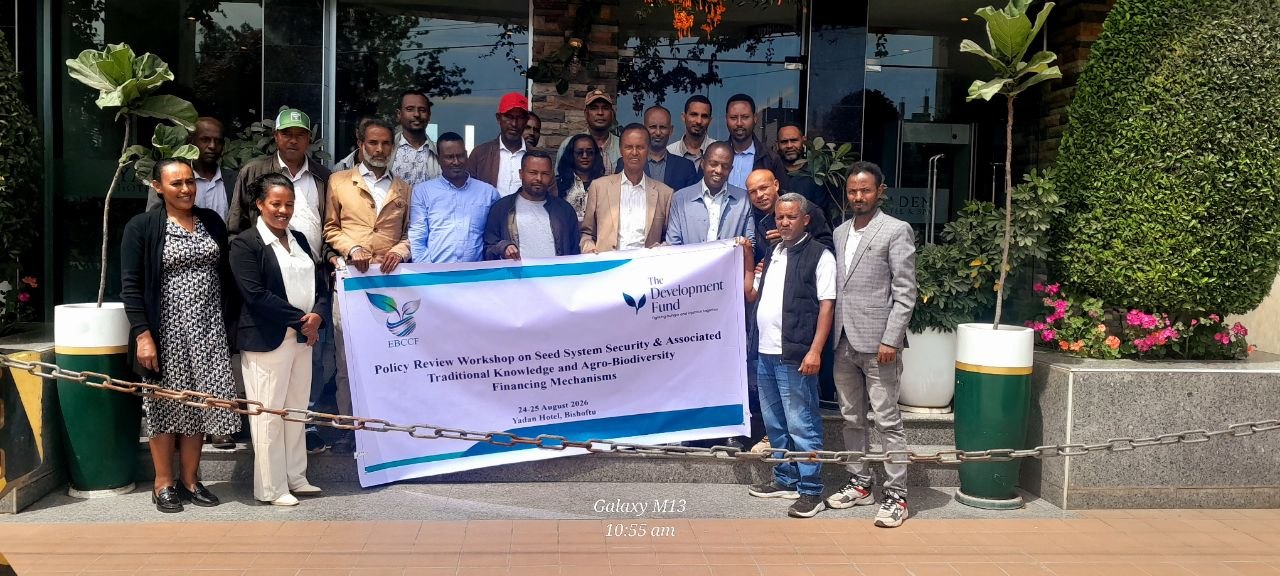
In this context, the Policy Review Workshop on Seed Systems Security, Associated Traditional Knowledge and Agro-Biodiversity Financing Mechanisms, held on 24–25 August 2026 at Yaden Hotel, Bishoftu, brought together relevant stakeholders to review these challenges and identify practical policy and financing opportunities. The workshop was organized under the Climate Resilient Rural Community (CRRC) Project, with support from the Development Fund (DF), to strengthen recognition of farmers’ and communities’ roles and rights, explore sustainable financing opportunities, and develop practical recommendations for enhancing seed security and agrobiodiversity conservation.
The workshop is expected to contribute to stronger policy and institutional frameworks, improved implementation and coordination, greater support for farmers and communities, sustainable financing and equitable benefit-sharing, supported by improved monitoring, accountability, and concrete follow-up actions.
- Keynote remarks
In his keynote remarks, Dr. Girma Balcha emphasized that agrobiodiversity and seed diversity are fundamental to life, food security, agricultural resilience and sustainable development. He highlighted Ethiopia’s rich biological and genetic resources as a valuable national asset and stressed that biodiversity should be recognized not only as an environmental concern but also as a foundation for agriculture, livelihoods and human well-being. He also expressed his sincere appreciation to the Development Fund (DF) for its valuable support to important policy initiatives and discussions like this workshop.
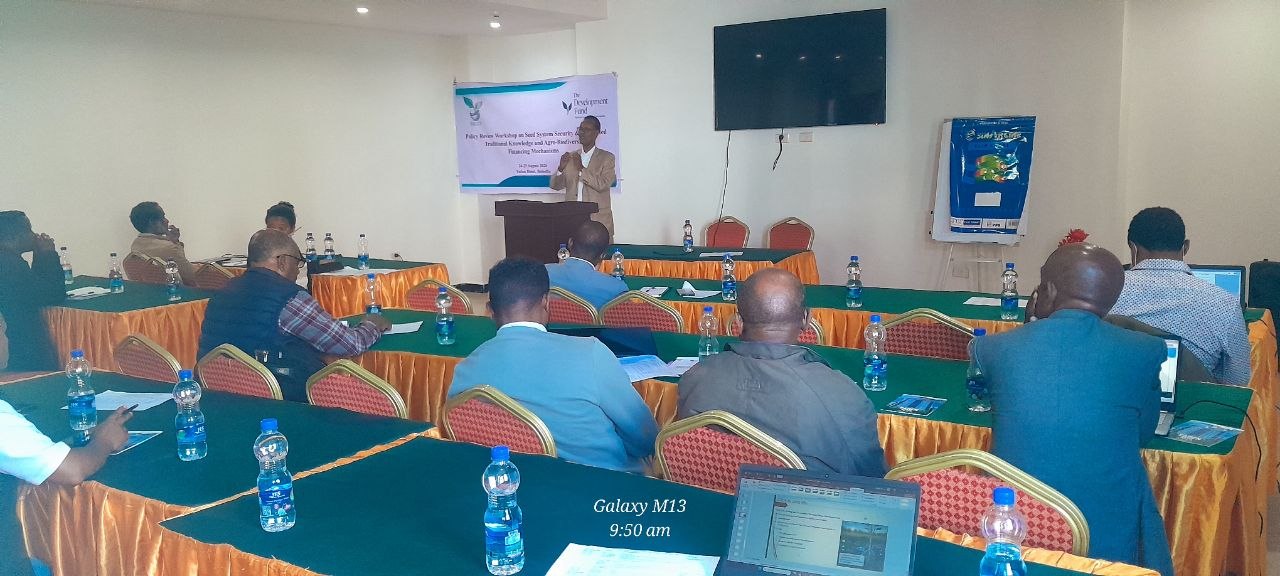
Dr. Girma underscored the strong link between agrobiodiversity policy and sustainable financing, noting that conservation and sustainable use cannot depend primarily on externally funded projects. He called for stronger public financing, greater awareness among policymakers and financial actors, and clearer institutional responsibility for mobilizing resources for agrobiodiversity.
He also emphasized the important role of farmers and communities as custodians of genetic resources and traditional knowledge. He called for appropriate incentives and fair benefit-sharing mechanisms to ensure that communities benefit from the sustainable use and commercialization of the resources they conserve. He concluded by urging stakeholders to move from recognizing the value of agrobiodiversity to concrete policy action, stronger public commitment and sustainable financing, ensuring that Ethiopia’s rich biological and genetic diversity is conserved, sustainably used and benefits present and future generations.
- Welcome Speech
In his welcome speech, Ato Edries Mohammed, representing the Development Fund, highlighted the strategic importance of the Climate Resilient Rural Communities (CRRC) Project (2026–2028) in strengthening rural livelihoods, economic empowerment, and climate resilience. He noted that the project, implemented by iDE, ORDA, and REST in the Oromia, Amhara, and Tigray Regional States, works with rural communities to improve livelihood opportunities and resilience to climate-related challenges.
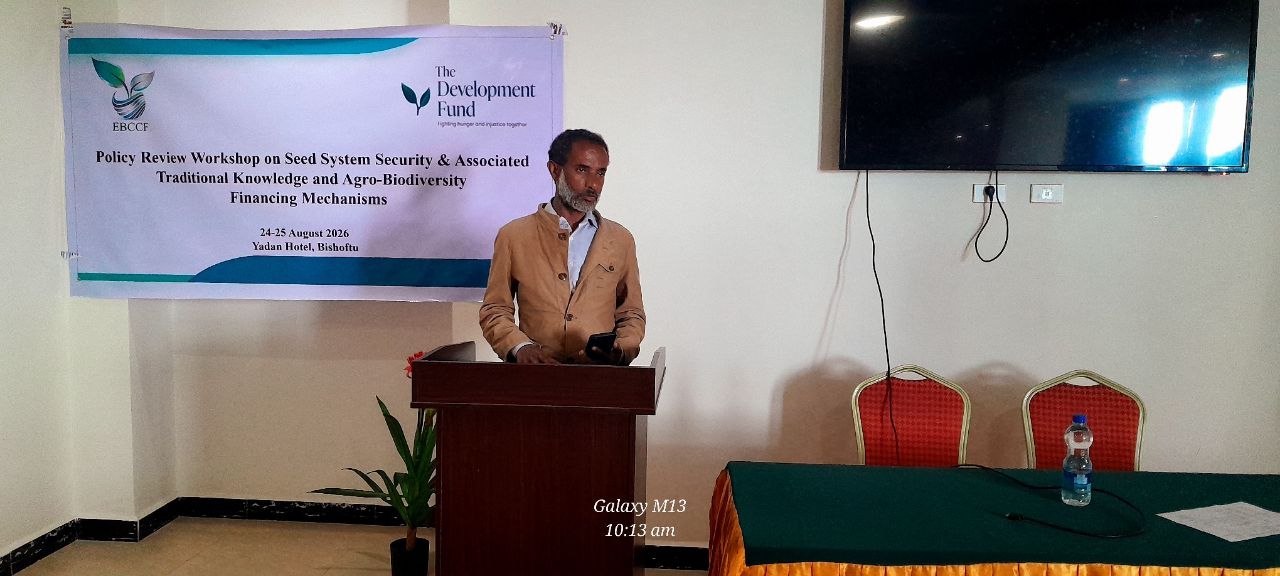
He emphasized the project’s support for agrobiodiversity conservation and sustainable use, as well as its engagement in strategic policy initiatives, including the review of seed systems and agrobiodiversity financing mechanisms. He stressed that stronger policy and financing frameworks are essential for creating an enabling environment for resilient agricultural systems and sustainable rural development. He reaffirmed the Development Fund’s commitment to supporting collaboration among government, development partners, implementing organizations, and other stakeholders to translate policy review outcomes into practical and sustainable solutions that benefit rural communities, strengthen agrobiodiversity and enhance climate resilience.
- Opening Speech
In his opening remarks, Ato Wubshet Teshome, representing the Ethiopian Biodiversity Institute (EBI), expressed his appreciation to the Environment, Biodiversity and Climate Change Forum (EBCCF) for organizing the policy review workshop. He emphasized that the workshop provides an important platform to assess existing policy and institutional arrangements related to Ethiopia’s seed system and agrobiodiversity financing, and to generate practical policy inputs for future policy formulation.
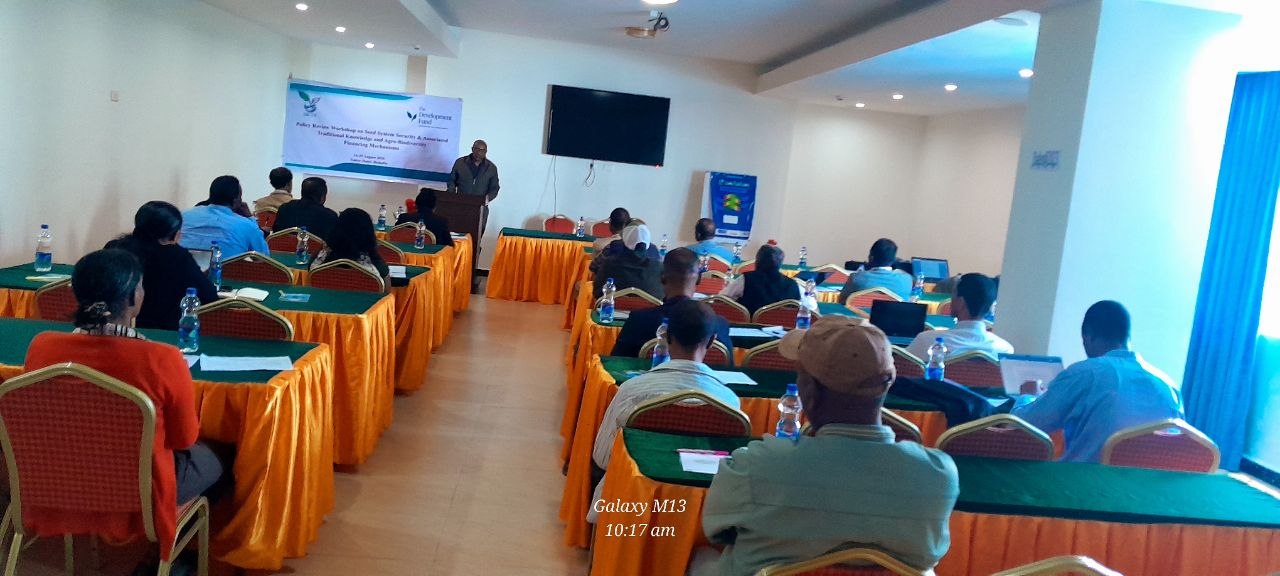
Ato Wubshet highlighted the importance of recognizing Ethiopia’s formal and informal seed systems as complementary components of the national seed sector. While the formal system focuses largely on improved varieties, the informal system plays a vital role in conserving and utilizing farmers’ varieties and landraces. He stressed that integrating these systems is essential for strengthening Ethiopia’s seed security and agricultural resilience. He also acknowledged EBCCF’s contribution to the conservation and management of landraces, particularly through support to Community Seed Banks (CSBs) and community-based management of plant genetic resources.
Addressing the important question of “How is agrobiodiversity financed?” Ato Wubshet emphasized the need to examine the resources, institutions and mechanisms required to sustain agrobiodiversity conservation and use. He encouraged workshop participants to actively contribute their experiences and ideas, noting that effective solutions require the collective engagement of government institutions, communities, development partners and other stakeholders. He concluded by calling for concrete recommendations that can strengthen Ethiopia’s seed system and establish more effective and sustainable mechanisms for financing agrobiodiversity.
- Presentation Topic Covered
Dr. Basazen Fantahun of the Ethiopian Biodiversity Institute (EBI) presented on “Emerging Seed Systems Policy: Centering Community Roles in Seed Diversity and Genetic Resource Rights in Ethiopia.” His presentation highlighted the importance of seed security, Ethiopia’s pluralistic seed system, community-based seed management, and the need for policies that recognize and protect seed diversity, farmers’ varieties and associated traditional knowledge.
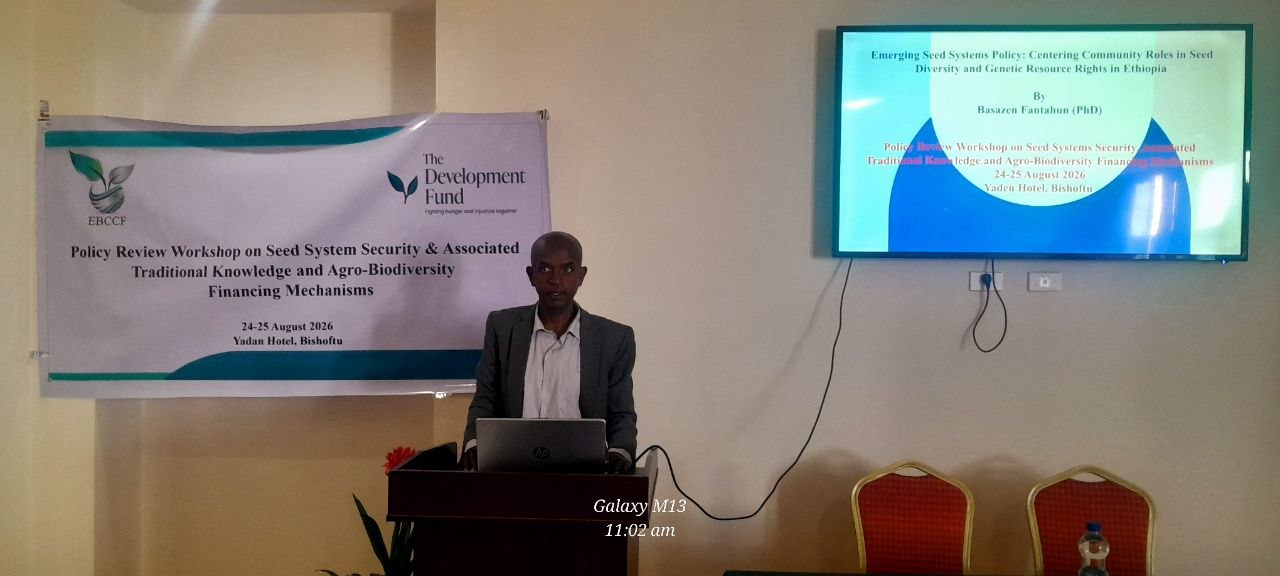
Dr. Basazen emphasized that seed security goes beyond the availability of certified seed and includes availability, accessibility, affordability, quality, timeliness, suitability, diversity, resilience and farmers’ choice. He highlighted the complementary roles of the formal, intermediate/community and farmer seed systems, stressing that their effective integration is essential for a resilient national seed system. Particular attention was given to Community Seed Banks (CSBs) as important mechanisms for conserving, multiplying and distributing farmers’ varieties and locally adapted seed while strengthening links between community-level and national conservation systems.
The presentation also highlighted the importance of farmers’ varieties, evolutionary populations, and varietal mixtures in conserving agrobiodiversity and strengthening agricultural adaptation and resilience. Dr. Basazen identified areas where Ethiopia’s existing legal and regulatory framework could be further strengthened to recognize genetically diverse seed materials and protect the contributions and rights of farmers and communities. He concluded by calling for a seed policy framework that places farmers and communities at the center, strengthens pluralistic seed systems, recognizes dynamic seed diversity, protects associated traditional knowledge, and supports the sustainable use of genetic resources.

The second presenter, Dr. Girma Eshetu of the Ethiopian Biodiversity Institute (EBI), delivered a presentation entitled “Policy Review on Agrobiodiversity Financing Mechanisms” during the Policy Review Workshop. His presentation examined Ethiopia’s biodiversity-financing context, existing financing gaps, emerging policy frameworks, and innovative financing opportunities.
Dr. Girma emphasized that agrobiodiversity is an important asset for food security, livelihoods, economic development and climate resilience. However, financing for agrobiodiversity conservation remains limited and fragmented, with challenges including weak finance tracking, inadequate incentives for farmers and communities, limited private-sector investment and dependence on short-term projects. To address these challenges, he highlighted a range of potential financing mechanisms, including Payment for Ecosystem Services (PES), carbon finance, Access and Benefit-Sharing (ABS), blended finance, impact investment, sustainable value chains, community seed-bank funds and local conservation funds.
The presentation also highlighted Ethiopia’s emerging nature-finance framework, including the NBSAP 2025–2030, ABS framework, Green Legacy and Degraded Landscape Restoration Special Fund, PES framework and emerging carbon-market opportunities. These frameworks provide opportunities to mobilize resources for biodiversity conservation and sustainable use, although their potential to directly support agrobiodiversity still needs to be further developed.
At the end of the presentation, participants provided comments and raised key issues, including the need for stronger stakeholder participation, improved institutional coordination, better implementation of existing policies and laws, strengthened regulatory capacity, and greater attention to emerging threats such as invasive alien species. Participants also identified key investment priorities, including farmer and community incentives, on-farm conservation, community seed banks, genetic resources, traditional knowledge, ecosystem restoration, markets and value chains, and research and innovation.
In highlighting the way forward, the presentation underscored the need for Ethiopia to move beyond fragmented and short-term financing towards an integrated, transparent and sustainable financing system that links investment with measurable biodiversity outcomes and community benefits. It also emphasized the importance of recognizing farmers and local communities as key partners in the conservation, sustainable use and benefit-sharing of agrobiodiversity.
- Discussion
The group and general discussions held during the Policy Review Workshop brought together participants’ views on seed systems, agrobiodiversity financing, farmers’ rights, genetic resources and the implementation of relevant policies and legal frameworks.
Participants recognized the importance of Ethiopia’s informal, intermediate and formal seed systems, noting that each has distinct strengths and limitations. The informal seed system remains particularly important because of its accessibility, affordability, local adaptation, contribution to crop diversity and strong connection with farmers’ knowledge and social networks. Participants emphasized the need to strengthen the complementarity and integration of the three systems rather than treating them separately.
A major issue raised was the need for a more flexible legal and regulatory framework that recognizes farmers’ varieties, evolutionary populations, varietal mixtures and traditional knowledge. Participants supported an adapted approach to DUS requirements that reflects the genetic diversity and characteristics of farmers’ varieties and avoids regulatory barriers that could contribute to the loss of locally adapted genetic resources.
Regarding agrobiodiversity financing, participants identified farmer incentives, traditional knowledge, on-farm conservation and community seed banks as the most significant financing priorities, followed by genetic resources, restoration, market development and research. They also stressed the need for stronger monitoring, reporting and verification (MRV) systems to support performance-based financing and demonstrate measurable agrobiodiversity outcomes.
Participants further highlighted significant gaps in the implementation of existing policies and legal instruments, including limited awareness, weak institutional coordination, inadequate monitoring and traceability, insufficient stakeholder engagement and unclear institutional responsibilities. They called for stronger cross-sectoral coordination, clear mandates, improved implementation mechanisms and mainstreaming biodiversity conservation across relevant sectors.
The general discussion also emphasized the need to strengthen capacity building, financial resource mobilization and tracking, and the implementation of Access and Benefit-Sharing (ABS) and farmers’ rights. Participants expressed concern that farmers and local communities have not yet received adequate benefits from the genetic resources and traditional knowledge they have conserved and developed. Greater transparency and effective mechanisms for tracing and sharing benefits were therefore highlighted as important priorities.
Participants also raised concerns about the potential implications of genetically modified organisms (GMOs) for agrobiodiversity and stressed the importance of understanding and addressing their possible impacts on genetic resources, ecosystems and food systems.
The discussions emphasized that the workshop should contribute to concrete follow-up actions, including capacity building, improved financing, stronger implementation of farmers’ rights and ABS, better financial tracking, enhanced institutional coordination and appropriate safeguards for agrobiodiversity. Participants also called for the workshop outcomes to be communicated to decision-makers and institutional leaders to inform future policy and institutional action.
7. Conclusion
The workshop highlighted the need to strengthen Ethiopia’s seed systems, conserve agrobiodiversity, protect traditional knowledge, and improve sustainable financing. Participants emphasized stronger coordination, appropriate regulation, capacity building, farmer and community participation, and equitable benefit-sharing. The outcomes will support efforts to translate policy commitments into effective action for resilient agriculture and sustainable development.