

1. Introduction
Ethiopia is globally recognized as a center of origin and diversity for several important crop species. However, increasing pressures from climate change, land degradation, market-driven seed systems, and loss of indigenous knowledge threaten the conservation and sustainable use of plant genetic resources. In response, Community Seed Banks (CSBs) have emerged as an effective community-based mechanism for conserving agrobiodiversity, strengthening seed sovereignty, and enhancing climate resilience.
Within this context, and in alignment with the Climate Adaptation and Resilience for Development (CARD II) Project and the National Biodiversity Strategy and Action Plan (NBSAP), the establishment of a national network of community seed banks was identified as a strategic intervention to improve coordination, knowledge sharing, institutional sustainability, and impact at scale commensurable to national biodiversity.
In recognition of these and the growing importance of locally adapted seeds, as well as the valuable experience accumulated by CSBs across Ethiopia, EBCCF, in collaboration with the Ethiopian Biodiversity Institute (EBI), and with the financial support of the Development Fund, has initiated the establishment of the Ethiopia Community Seed Bank Network. This workshop was held on 18 December 2025 at Bishoftu town, aiming to strengthen the cooperation among seed banks, harmonize practices, support capacity-building, and promote sustainable seed systems that align with national biodiversity and climate resilience strategies. https://www.moa.gov.et/ethiopias-community-seed-bank-networkempowering-seed-authority/
The Establishment of the Ethiopian Community Seed Banks Network, held on December 18, 2025, in Bishoftu, aimed to:
- Formally establish a national platform and governance structure for Community Seed Banks
- Strengthen collaboration among CSBs, government institutions, research organizations, and civil society
- Share experiences, best practices, and lessons learned from existing CSBs
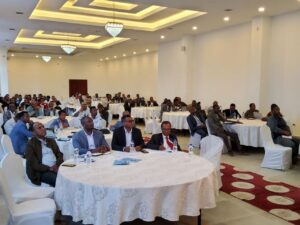
Participants of the CSB network establishment workshop
The participants of this workshop were from all implementing institutions (IPs), federal and regionals sectors officials, community seed bank leaders, researchers, representatives of non-governmental organizations, and other guests. More than 92 participants (86 male and 06 female) participated in this event.
2. Welcome remark
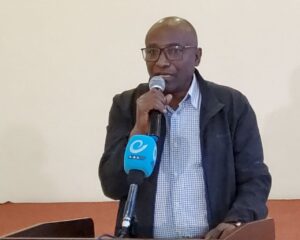
The welcome remark was made by Mr. Wubshet Teshome, Executive Director of Crop and Horticulture Research at the Ethiopian Biodiversity Institute (EBI). In his welcome speech, he pointed out that since the 1990s, many CSBs have been established; however, they were not networked. This lack of network caused challenges in supporting and coordinating these CSBs. Saying this, he invited Dr. Karta Kaskie, Director General of the Ethiopian Biodiversity Institute, to give an opening speech.
3. Opening remark
Dr. Karta started his speech by extending warm thanks to all who made it to this historical gathering despite their busy schedule. In his message, Dr. Karta emphasized that when community seed banks are established, they are expected to conserve genetic resources in a way that are appropriate to their local contexts. He continued to say, so far there are 53 Community Seed Banks, which collectively serve over 10 thousand seven hundred farmers, particularly by availing seeds for those members having a shortfall in planting materials.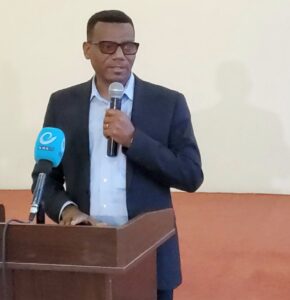
He further pointed out that, to maintain the quality and safety of preserved seeds for farmers, it is necessary to strengthen existing seed banks and establish new ones. Dr. Karta concluded his speech to say, this network is expected to facilitate the sharing of useful information and experiences among community seed Banks. With these useful remarks, he announced the workshop was officially open.
4. Keynote remark
The keynote remark was delivered by Dr. Girma Balcha, Executive Director of the Environment, Biodiversity (EBCCF) and Climate Change Forum. In his insightful presentation, Dr. Girma traced the historical foundations of seeds, emphasizing their significance not only as agricultural resources but also as cultural heritage. He highlighted that Ethiopia is recognized as a hot spot of its rich biodiversity and vast array of indigenous and endemic plant, animal and microbial genetic resources. Dr Girma emphasized that, given the diversity and enormity of Ethiopia’s biodiversity at all levels (ecosystem, species, and gene), the number of so far established Community Seed Banks should not be limited to 53 but would deserve 200 at a minimum.

Dr. Girma, therefore, advocated for an ambitious target of reclaiming the displaced and neglected crop varieties through the establishment of CSBs to collect samples and multiply them for continued availability in their respective ecosystems. For this to happen, he said, the Network is expected to be instrumental in building capacities of CSB members through exchange of experiences in management and technical handling of seeds and other planting materials. He elaborated on the multifaceted role of the seed banks not only in conserving agricultural biodiversity but also in promoting the sustainable use of crops to enhance food security and their resilience for continued existence. Dr. Girma further said, the Community Seed Banks Network acts as a critical conduit for fostering collaboration among farmers, agricultural stakeholders, research institutions, and development organizations. In his further remark, the CSB empowers local communities by providing access to a diverse range of seeds, thereby supporting traditional agricultural practices while encouraging innovations. Dr. Girma’s point underscores the importance of a robust and accessible seed bank system, which serves as a cornerstone for Ethiopia’s agricultural development and biodiversity conservation, thereby contributing to economic growth and food & nutrition security.
5. Presentations and detailed discussion
a. Status, Achievements, and Challenges of CSBs
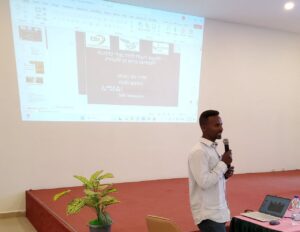
A technical presentation entitled “The Establishment, Achievements, Challenges, and Future Directions of Ethiopian Community Seed Banks” was delivered by Mr. Nesru Temam (EBI). The presentation documented:
Key achievements:
- Improved access to locally adapted and diverse seed varieties
- Strengthened farmer capacity in seed selection, storage, and regeneration
- Enhanced resilience of smallholder farmers to climate variability
Key challenges:
- Limited financial and institutional sustainability
- Capacity gaps at community level
- Fragmented coordination among CSBs and stakeholders
Proposed strategic directions:
- Strengthening national and regional CSB networking
- Institutional integration with biodiversity and climate programs
- Capacity building and policy support
b. Stakeholder Roles and Institutional Collaboration
A complementary paper on “The Role of Stakeholders in Community Seed Banks,” presented by Mr. Wubshet Teshome (EBI), highlighted the shared responsibilities of:
- Government institutions (policy, coordination, technical support)
- Research institutions (knowledge generation and innovation)
- Civil society organizations (capacity building and facilitation)
- Local communities (ownership and implementation)
c. Evidence from model CSB: Community-Level Impact
The farmer, Mr Kebede Sheye, a leader of Chefe Donsa CSB, addressed the achievements of their Community Seed Bank, which demonstrated tangible outcomes, including:
- Conservation of indigenous crop varieties
- Improved household seed security
- Strengthened community organization and ownership
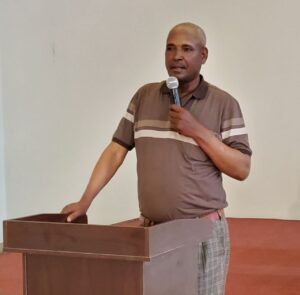
According to Mr. Kebede, the Chafe Donsa CSB is among the first of its kind in the country to restore and conserve local crop varieties. To date, the organization has successfully conserved more than ten local crop varieties, demonstrating a strong commitment to preserving agricultural diversity. This effort is supported by a growing membership base of more than 980 individuals, reflecting the community’s active participation and investment in sustainable farming practices. Mr. Kebede further noted that in 2025, the capital of their cooperative has reached 45 million birrs. This figure has been confirmed and audited by the Woreda Cooperative Development Office, ensuring transparency and accountability in their financial practices. Their CSB has now become the owner of big farm machinery such as a combine harvester and a tractor
d. Governance Framework and Network Establishment
A draft document titled “The Establishment and Operational Bylaws of the Ethiopian Community Seed Banks Network” was presented by Dr. Girma Eshetu (EBI). The document outlined:
- Network governance structure
- Membership criteria and roles
- Decision-making and coordination mechanisms
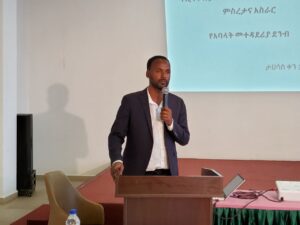
Following participatory discussion and validation, the Ethiopian Community Seed Banks Network was formally established, marking a major institutional milestone aligned with national biodiversity governance priorities.
e. Climate Adaptation and Rural Development (CARD II) Project Strategic Intervention and Impacts
CARD II Project overview, interventions, and strengths, presented by Dr. Dejene Teressa, emphasized the project’s contribution to biodiversity conservation, climate adaptation, and institutional strengthening. According to the presenter, the CARD II is a major project funded by the Development Fund (DF) and being implemented by six national/local and international nongovernmental organizations. Among those, EBCCF has been working as a strategic partner in backstopping other implementing partners (iDE, HELVETAS, ORDA, REST, and We-Action) in agrobiodiversity mainstreaming, seed systems, CSB, NRM, policy dialogue, and advocacy.
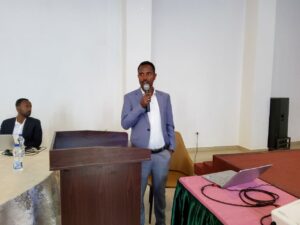
The key achievements of a CARD II strategic intervention include:
- Policy gaps on farmers’ seed rights and effective land use were identified and communicated
- Farmer-gene-bank-research platform created.
- Many manuals/guidelines were prepared on CSB, seed system, agrobiodiversity, and NRM, etc, and distributed to different organizations for technical capacity building.
- Many Training of Trainers (TOT) were conducted, focusing on seed quality management, seed security assessments, establishment and operation of Community Seed Banks (CSB), effective management of CSB seed stocks and revolving loans, and the implementation of a robust CSB business model, participatory variety selection (PVS), and prioritizing agrobiodiversity management, etc. As a result, the existing seed system is well understood and mainstreamed into IPs programs
6. Discussion
The discussion was led by Dr Karta Kaskie and Dr Girma Balcha. The discussion session focused on the proposed establishment of an Ethiopian Community Seed Bank (CSB) Network, aiming to strengthen coordination, knowledge sharing, policy engagement, and collective action among community seed banks operating across different regions of the country.

During the deliberations, all participants and CSB representatives unanimously agreed on the importance and necessity of establishing the national CSB network. Participants emphasized that a formalized network would enhance collaboration among CSBs, improve the conservation and sustainable use of farmers’ varieties, and create a stronger platform for advocacy, capacity building, and engagement with government institutions, research centers, and development partners.
However, participants carefully reviewed the draft bylaws presented for the establishment and governance of the network and reached a consensus that itrequires further revision and refinement. Key issues raised included the need to:
- Clarify the governance structure and roles of network organs,
- Strengthen provisions related to accountability, transparency, and decision-making processes, and
- Align the bylaws with existing national legal frameworks and relevant biodiversity and seed policies.
Participants recommended that the bylaws revision process be conducted through a participatory approach, involving wider consultation with CSBs, relevant government offices, and legal experts before final endorsement and formal registration of the network.
Finally, as part of the interim organizational arrangements, CSB representatives elected Chefe Donsa Community Seed Bank as a member of the National Community Seed Bank Network Management Committee. The elected CSB was entrusted with representing community seed banks at the national level and supporting the coordination and establishment process for one year.
In the discussion, one of the issues raised was as to who should be entrusted in the position of chairperson and the secretariate. There was a tacit understanding that the Ethiopian Biodiversity Institute is the chair of this network agreed upon in the discussion. Furthermore, there was a consensus that the environment, Biodiversity and Climate Change Forum to serve in the secretariate position.
Finally, the EBI Director concluded the workshop by saying the Regional States who by some reason did not participate in this meeting will be informed through EBI to enable their onboard to the Network. With the completion of the bylaws, the document will be available to the members for adoption and signature as official establishment.
In the end, the chairperson thanked the participants and officially closed the meeting.